

Mortar that matches a 1920s wall
Our own crews set the piers and repair the brick, which matters on Tudor and Georgian brick you cannot easily match.
Atlanta's regraded hillsides and creek-soaked lots let old footings drop and tall brick chimneys tip, and Anglin's sets both back on steel piers.
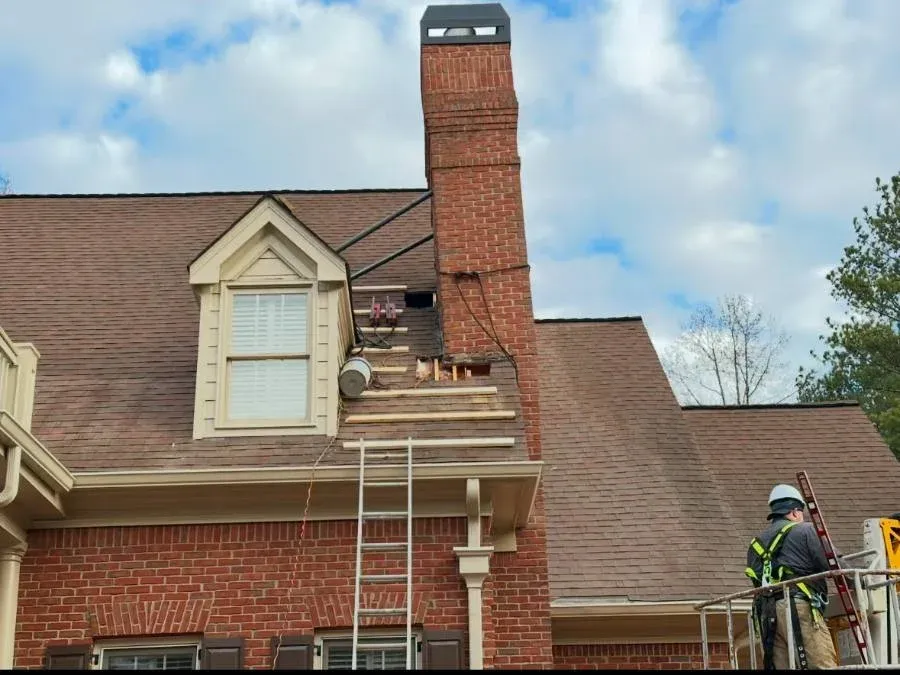
Anglin's works on the Atlanta houses that carry the most history: 1910s to 1940s brick and stone in Buckhead's garden suburbs, and streetcar-era homes closer in. We pier the footing that moved, bring the house back, and the same crew repairs the brick.
Estimates are free. Call 770-422-2924, and after hours a live answering service takes the call.
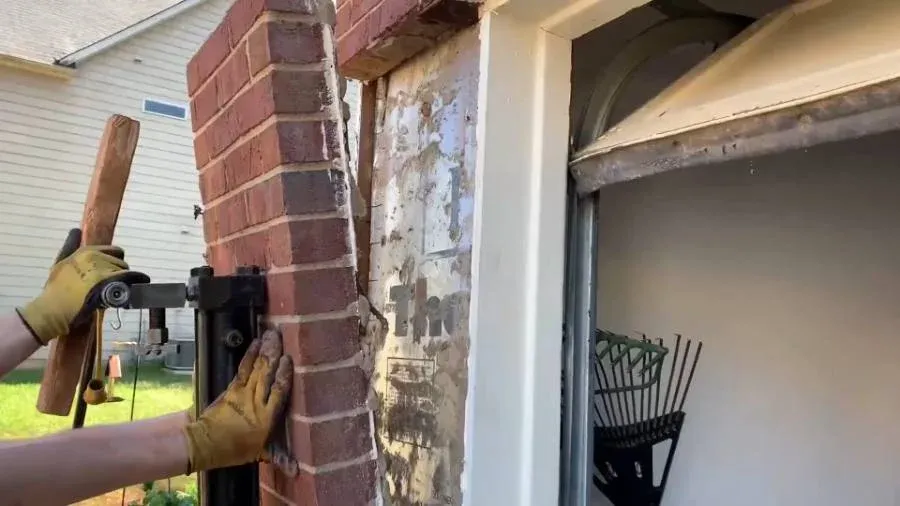
The rain quits and you go out to look. Water has cut a channel down the low side of the house, and up on the wall a crack steps through three or four courses of brick.
Old brick cracks on its own sometimes. What matters is whether the inside has started to match it, with a door that drags or a floor you can feel sloping.
Three of the four biggest foundation repair companies in Atlanta are franchises. Anglin's has been family-owned since Olin L. Anglin started it in 1930.
Our own crews set the piers and repair the brick, which matters on Tudor and Georgian brick you cannot easily match.

Nobody knows how far a century of fill runs until the pier goes down. Going deeper never raises your price.

Cracked brick on an older intown house can be loose veneer, not a settling footing, and we tell you when that is all.

Two-page contract, the quoted price is the price you pay, and our piers carry a lifetime warranty your buyer inherits.
At sample points in Garden Hills, near Chastain Park and in Virginia-Highland, the USDA survey maps "Urban land" rather than native soil. The Cecil and Pacolet clays here are rated low for shrink-swell, so what moves a footing is cut, fill and water, not swelling ground. Our foundation repair starts by finding which one moved your house.
Peachtree Creek hit a 23-foot stage in the September 2009 flood, and Nancy Creek damaged the Peachtree Dunwoody Road bridge in that same storm. Yards sloping toward those creeks, or toward Tanyard Creek behind Collier Hills, hold water against the downhill footing.
A sample point just north of Piedmont Park maps as Urban land mixed with moderately eroded Cecil clay, on 2 to 10 percent slopes. A downhill corner that collects runoff is a common place for settling to show up.
Peachtree Heights Park was built out between 1910 and 1940, and its Tudor, Georgian and Norman houses carry large masonry chimneys on sloped lots. A stack that heavy starts to tip once the ground under its footing softens.
The footing settled. That one needs piers.
The mason rested that upper brick on plywood and rafters, which is a different repair.
For a settled footing we set steel push piers and push the stack back while the piers lift, then anchor it to the house and repair the joints. Ask about leaning chimney repair before pricing a rebuild, and plan on your roofer for the flashing.
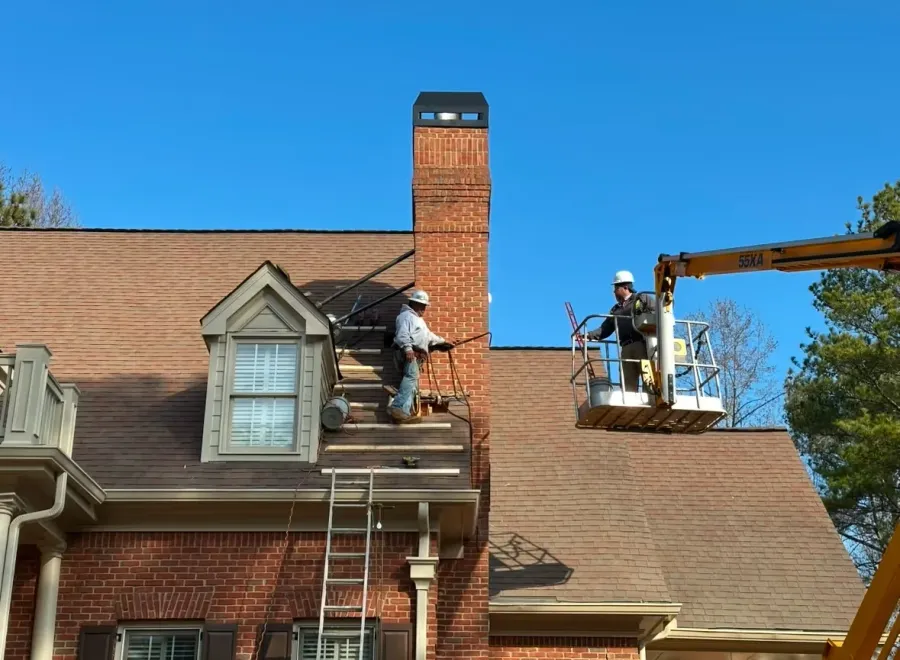
The other structural repairs Atlanta's old brick and sloped lots tend to need.

Stair-step cracks in Colonial Revival and Tudor veneer usually trace to broken wall ties. Anchors set through the mortar pin the wall back.

Walls holding back slopes toward Peachtree or Tanyard Creek get anchored once they start to lean. We do not build new ones.

Porch columns on Virginia-Highland's 1910s to 1930s bungalows can drop at the base and separate from the beam above.

About one in six Atlanta homes predates 1950, and a floor rolling toward the middle usually means a support settled underneath.
Atlanta's older neighborhoods north of I-20 were built in waves, and each wave left a different kind of house behind.
Peachtree Heights Park grew on Collier estate land bought in 1910, Brookwood Hills began in the early 1920s, and Garden Hills was founded in 1925. Inman Park was Atlanta's first planned suburb, Ansley Park went up from 1905 to 1908, and Virginia-Highland filled in with bungalows through the 1930s.
About a quarter of Atlanta's homes went up between 1950 and 1979, and more than a third from 2000 to 2019. Those newer houses sit on graded infill, where settling shows up as a sagging garage lintel or a stoop pulling away.
The city's Tree Protection Ordinance, rewritten in 2025, sets a protected tree's critical root zone at one foot of radius per inch of trunk diameter. That matters when a pier goes in beside a big oak.
A typical version starts when a buyer's inspector writes "structural" beside a crack stepping up the brick next to the chimney, and the closing date is already set.
We check whether the footing moved or the veneer let go, then pier only where the ground failed and straighten the chimney if it followed.
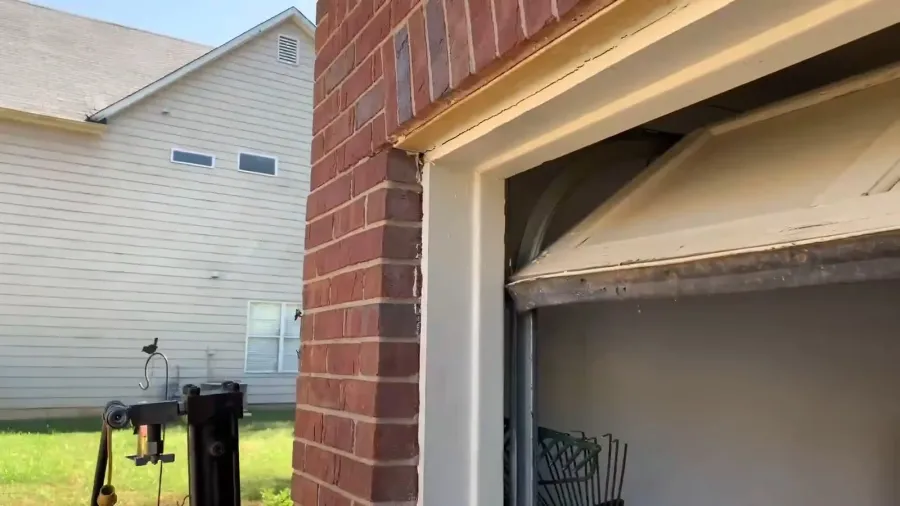
Hear from homeowners about the repair, the crew, and the finished work.
“Anglin's foundation & Masonry performed work on our tilting chimney, and they were outstanding in all areas. I called them about the problem and within 2 hrs. they were out to scope out the work. The next day they provided two approaches to consider.”
Honest answers before you make a decision.
Still have QuestionsWe're open six days a week, and our answering service takes your details after hours. We'll look at the footings, the brick and the chimney, then put the price on a two-page contract.
Book a free chimney and foundation check
Schedule your free estimate with a quick phone call.
770-422-2924