

No charge for river-terrace depth
Low lots near the Chattahoochee can send a pier well past the soft ground before it bears, at no extra cost.
Houses built in Duluth during the 1980s and 1990s sit on eroded clay slopes and damp river terraces, and when a corner, stoop or chimney starts to drop there, Anglin's sets it back on steel.
Anglin's does foundation repair in Duluth on the houses Gwinnett County built fastest. Close to 58% of the city's homes went up between 1980 and 1999, and the median one was finished in 1994, so a big share of Duluth is now between 27 and 46 years old.
Our family has run the business out of Marietta since 1930. Our own crews drive the steel piers, brace the basement walls and repoint the brick on the same visit. Call 770-422-2924 for a free estimate, and most jobs land on the calendar one to four weeks out.
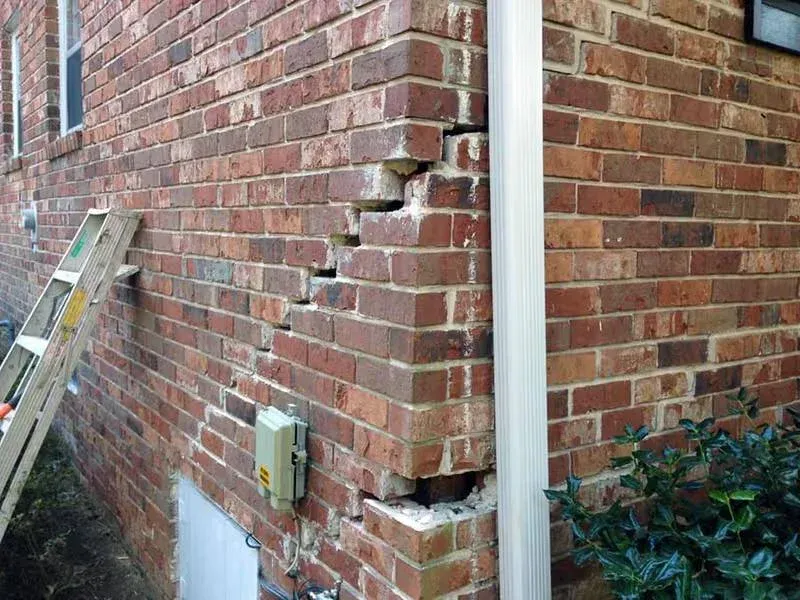
The side yard that falls away from your house is still soft three days after a storm. On that same end of the house, a crack has opened under the dining room window and runs down through the brick to the foundation, wider at the top than at the bottom.
Inside, the basement door on that end has started dragging on its threshold. Out front, the brick steps have dropped enough that the joint against the house wall is open.
Olin L. Anglin started this company in 1930, and the fourth generation of his family works in it now.
Low lots near the Chattahoochee can send a pier well past the soft ground before it bears, at no extra cost.

Stair-step cracks on a 1990s brick front can be failed wall ties needing anchors, and we say so before any pier goes on the estimate.

With so many Duluth townhomes and rentals, the people signing get a two-page contract and a quoted price that stays the price.

Certified welders fabricate our steel brackets, heavy enough to lift a two-story brick wall or a full masonry chimney. We use no subcontractors, so the crew that lifts your corner stays to close the cracks and match the mortar.
USDA soil maps put about half of Duluth on Madison sandy clay loam, and more than 60% of the city's mapped soils carry an eroded label. USDA rates that clay low for shrink-swell, so slope, soil graded or backfilled around a footing, and water reaching that soil do most of the damage, not swelling ground.
Along the Chattahoochee on the city's north edge, the map turns to bottomland soils like Chewacla and Toccoa that flood often and stay wet. That strip is a small share of Duluth, but houses on the terraces just above it stand on wetter ground than the houses up near downtown.
How the piers are driven and loaded is covered on our foundation repair page.
A brick chimney on an outside wall stands on its own small footing, separate from the house foundation. Search for chimney repair in Duluth and the first two pages are sweeps, cleaners and directories, and none of them lift a chimney that is moving.
When wet soil softens under the footing, the chimney tips out and the seam at the siding opens widest near the top.
When the top tilts in toward the house, the mason set the upper brick on roof sheathing with no bearing wall under it. That lean gets structural steel, usually resting on a bearing wall up in the attic.
We leave caps, liners and leak work to sweeps and roofers and stay with the structure and the brick. The full method is on our leaning chimney repair page.
Houses of the age and build common across Duluth tend to need these next.

Brick steps on a graded lot often sit on backfill instead of the footing, and we pier and lift them without tearing them out.

A two-car door opening carries a long run of brick, and when the steel angle over it sags, that brick cracks in steps. A brick front leaning out with no cracks inside the house is often a wall-tie problem that anchors can hold.

Backyard walls stepping down toward the river terraces lean over the years, and we stabilize the walls you already have without building new ones.

A tall deck off a daylight basement stands on posts, and piers under failed footings stop them from settling further.
Duluth grew fast in the 1970s and 1980s along with the rest of Gwinnett County, and the Census count shows almost no houses left from before 1950. About 17% of homes are townhomes and roughly 43% of households rent, so plenty of repairs here get approved by an HOA board or a landlord.
The tracks through downtown Duluth follow the Eastern Continental Divide, a ridge line that runs fairly level. Rain on the river side drains toward the Chattahoochee, and rain on the other side heads for the Atlantic.
Lots on both sides slope away from that ridge. The soil follows the slope, with eroded Madison clay on the hillsides and wet Chewacla and Toccoa bottomland along the river.
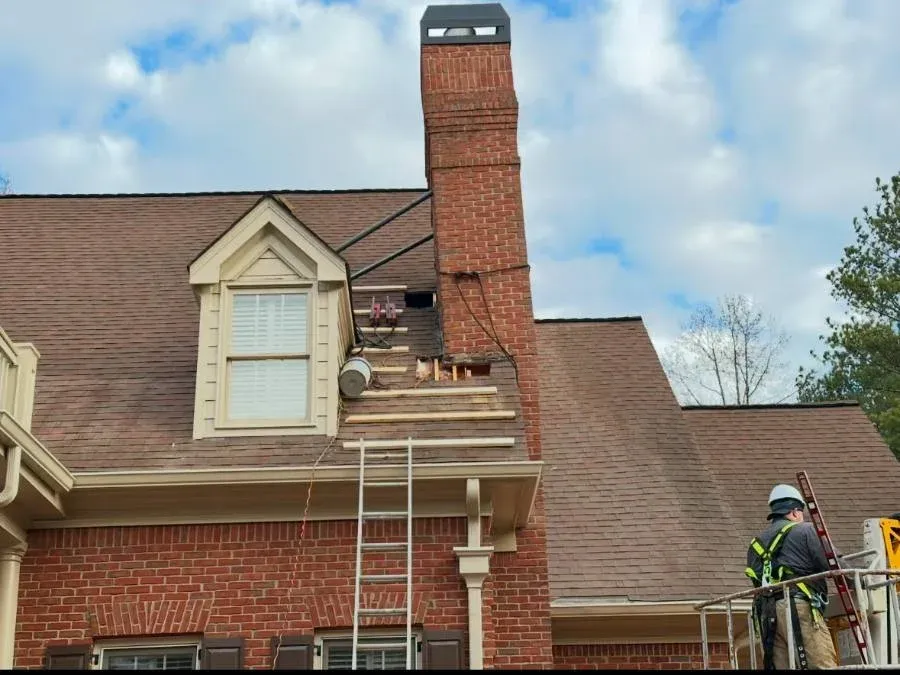
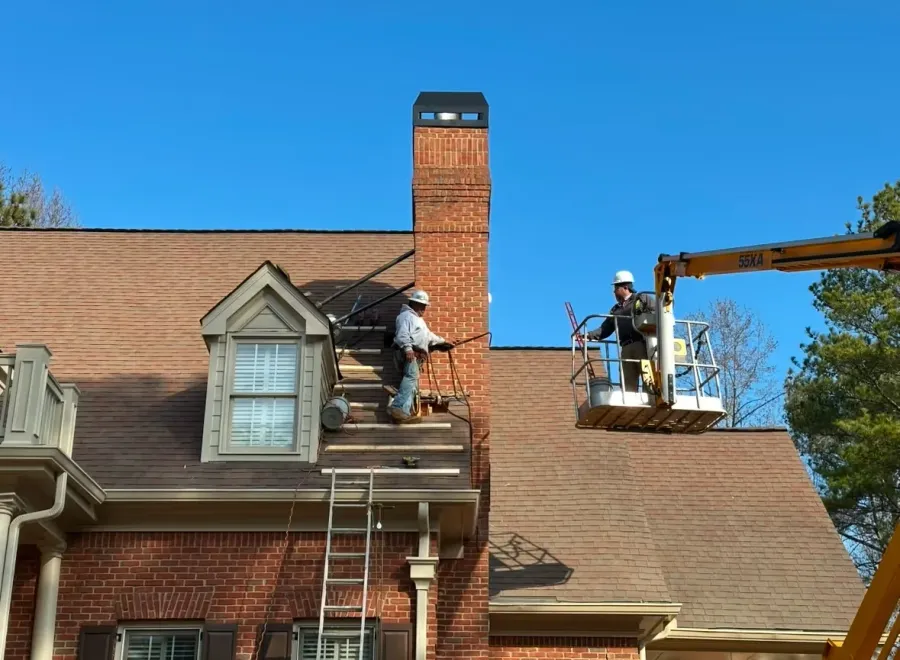
This job starts with a chimney that looks straight from the yard up to the gutter, then tilts in above the roof. On a tall two-story chimney that lean shows from the street even when the brick below the roofline looks plumb.
At the roofline the mason is supposed to rest the brick on a load-bearing wall, but on a rushed build the upper courses go straight onto the shingles and roof sheathing.
Piers under the footing will not fix this kind, because the footing never moved.
Flashing and roof leaks stay with your roofer, and our crew handles the structural steel.
Hear from homeowners about the repair, the crew, and the finished work.
“My foundation at the entrance to my garage had settled significantly over the lifetime of my home, causing the brick facia to crack in multiple directions. Anglin Did a great job, correcting the settlement and closing the cracks In the facia.”
Honest answers before you make a decision.
Still have QuestionsA footing that has moved may stop, creep or keep going, and nobody can tell which from a single look. Call 770-422-2924 Monday to Saturday from 8 AM to 6 PM, or reach the live answering service after hours. Estimates are free, and Regions Bank offers financing on approved credit.
Set a time for your free estimate
Schedule your free estimate with a quick phone call.
770-422-2924