
Steel and masonry, one crew
Our lift crew repoints its own joints, which matters on brick that is hard to match after three decades. Our certified welders make custom brackets in-house, strong enough to lift heavy brick walls and chimneys.
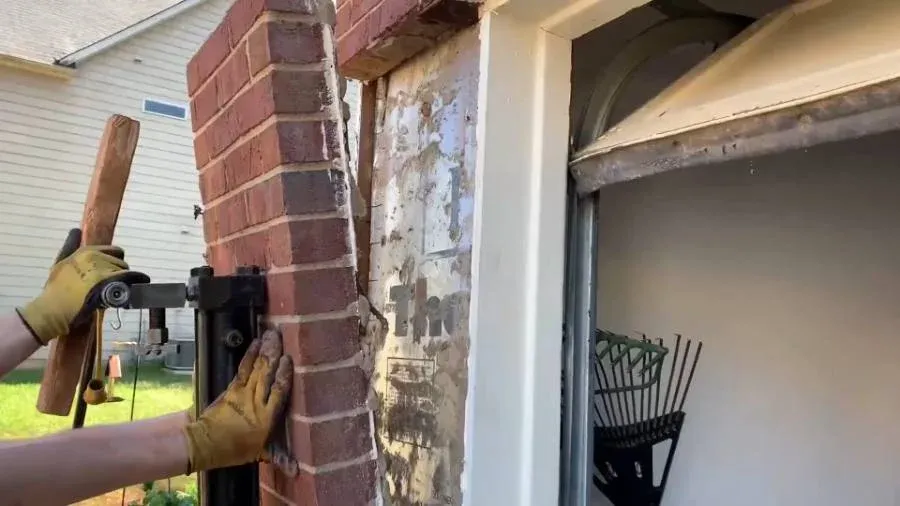
Brick houses built across Johns Creek in the 1980s and 1990s can settle at garage corners and chimneys, and Anglin's fixes both with push piers.
Anglin's does foundation repair in Johns Creek on the houses that filled in after the 1981 land purchase for Technology Park along Medlock Bridge Road. Census figures put 68% of homes here in the 1980 to 1999 window, so most of the city is now 25 to 45 years old.
We work out of the Marietta office our family has run since 1930, and our own crews handle the piers and the brick. Dial 770-422-2924 for a free estimate, and we will tell you whether the footing moved or only the veneer.
A gap opens over a window head on the side of the house, thin enough that you talk yourself out of it. Then the door into the office starts rubbing at the top corner, and somebody slides a shim under the sideboard because the floor there is not flat.
Four-sided brick hides trouble for a while. On a house built here in the early 1990s that brick is a skin hung on ties, and a footing corner easing down has to show up in it somewhere. Most of these pads were cut and filled, and 30 years is about when that starts to show.
Many St. Ives homes wear four-sided brick, so a repair has to fix the structure and the look of the wall.
Our lift crew repoints its own joints, which matters on brick that is hard to match after three decades. Our certified welders make custom brackets in-house, strong enough to lift heavy brick walls and chimneys.

Our steel piers carry a lifetime warranty that transfers to the next owner.

A cracked wall on a 1990s two-story can be a wall-tie problem, and we say so before anyone mentions piers.

Soft bottomland near the Chattahoochee can send a pier deeper than expected, and unlimited depth costs nothing extra.
Johns Creek drops about 300 feet inside its limits, from roughly 1,180 feet around Ocee to about 880 at the Chattahoochee. Building on that grade usually means grading, so many lots here were likely cut and filled, and our foundation repair starts with which part gave way.
The USDA maps several areas of old farmland here as severely eroded. The upland soils, mostly Cecil, Madison, Appling and Pacolet, rate low for shrink-swell, so swelling clay is rarely the story.
In our family's experience, about 90% of settling traces back to water getting under a footing, softening the soil or opening voids until a corner drops.
Near the Chattahoochee and its streams, the mapped soils turn to Congaree, Chewacla and Toccoa, alluvial ground that tends to stay wet, softer than the uplands.
Corners carry the most weight, so settlement usually shows first at the garage corner or an addition.
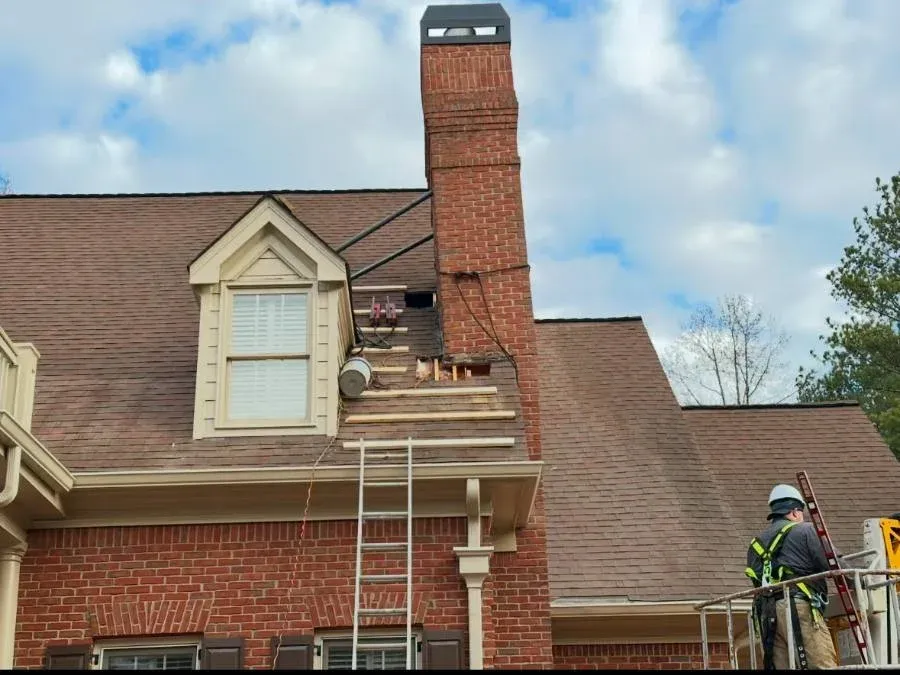
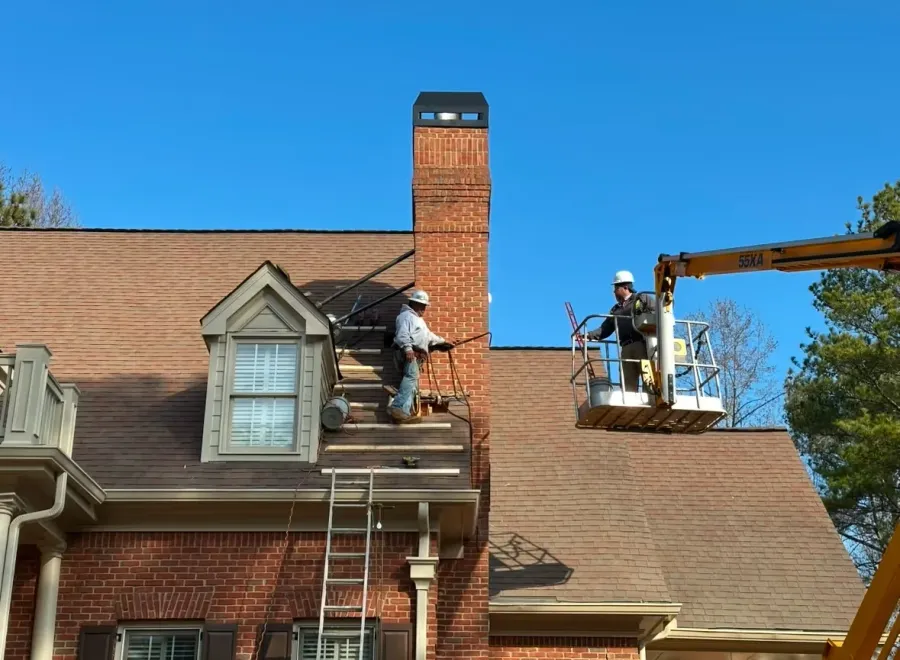
Tall exterior brick chimneys on two-story houses lean one of two ways, and the direction points to the cause.
The mason often set the upper brick on roof decking with no bearing wall under it.
The footing has settled. The chimney stands on its own footing, and water softening the soil beneath it lets the whole stack lean out.
For a settled footing, we drive steel push piers under the chimney to load-bearing soil. The base lifts while push poles set in the yard ease the top back toward the wall, and brick anchors stand in for the broken wall ties.
Our masons repoint every joint the movement cracked, and your original brick stays up with no rebuild. See the method in detail under leaning chimney repair.
Thirty years on a slope wears a house down in more than one place.

A double garage door on a 1990s two-story carries a long run of brick, and a sagging lintel cracks the brick above it.

Veneer pulling off a four-sided brick house can often be anchored back through the mortar joints.

Terraced backyards stepping down toward the river lean on their walls over time, and we anchor existing walls without building new ones.

A basement cut into the hillside takes soil pressure on its uphill side, and a bowing block wall gets braced with steel beams.
Johns Creek became a city on December 1, 2006, joining the crossroads communities of Ocee, Newtown, Shakerag and Warsaw. Most of the building came earlier, along GA 400 in the 1980s and 1990s.
ZIP 30022 holds the oldest stock, with a median build year of 1994 and nearly a third of its homes from the 1980s. Only a sliver of the city predates 1970, so this is aging-subdivision work.
St. Ives Country Club dates to 1989, with more than 750 homes along the Chattahoochee finished in four-sided brick or hardcoat stucco. The Country Club of the South opened its first nine holes in 1987.
Johns Creek itself runs about eight miles from southern Forsyth County to the Chattahoochee. Several soil map units here carry names like gullied land and severely gullied land, left from the farming that came before. Ground like that gives way faster once water reaches a footing.
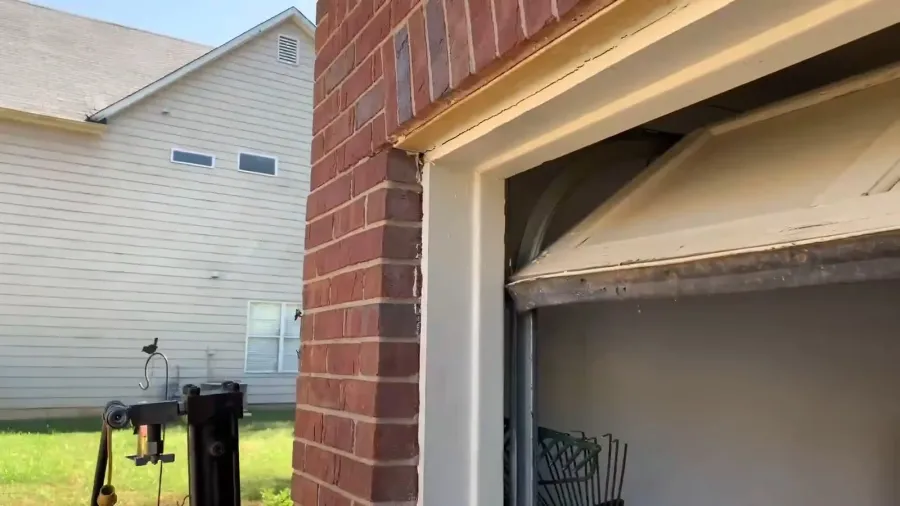
A typical call on a house like this starts with a stair-step crack beside the garage and a door that has begun to rub. We dig at the settled corner and drive steel push piers under the footing to load-bearing soil.
Hydraulic pressure brings the corner back, brick anchors pin the loose veneer, and our masons repoint the cracked joints to match. A job this size rarely takes more than one day on site.
Hear from homeowners about the repair, the crew, and the finished work.
“They found cracks in our brick face that other, larger foundation repair companies missed. We had about a 2” slant in both windows of our garage because our foundation was settling and Anglin’s cinched it right up, then tacked the brick face back to the wall so it would stay in place.”
Honest answers before you make a decision.
Still have QuestionsOffice hours run Monday to Saturday, 8 AM to 6 PM, at 770-422-2924, with a live answering service handling calls after hours. Estimates are free, and most jobs reach the schedule within one to four weeks.
Set up your free pier and chimney inspection
Schedule your free estimate with a quick phone call.
770-422-2924