

Masonry that suits old brick
The crew that sets your piers also repoints the joints, so an old historic-district chimney gets brick and mortar that suit the house.
Loose backfill on Roswell's sloped 1970s and 1980s basement lots can keep settling and drag brick corners and chimneys with it, and Anglin's lifts them back on steel piers.
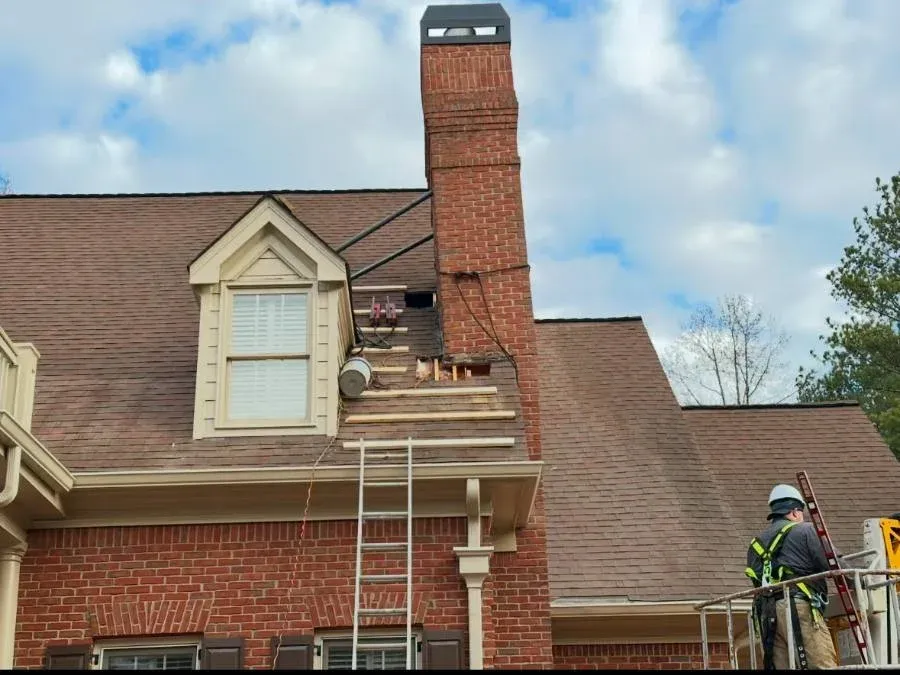
Anglin's handles foundation repair in Roswell, GA, where most houses are 1970s and 1980s block basements with brick veneer. We drive steel push piers under whatever settled, bring it back into place, and our own masons repair the brick the movement cracked.
Roswell sits inside the core territory our crews cover from Marietta, where Olin L. Anglin started the business. Phone 770-422-2924 to book a free visit, and if nobody is in the office, a live answering service takes your call.
The bedroom door has to be pulled now. It used to swing shut on its own, and this spring you started lifting the knob to get the latch to catch. Down the hall, a seam has opened where the wall meets the ceiling.
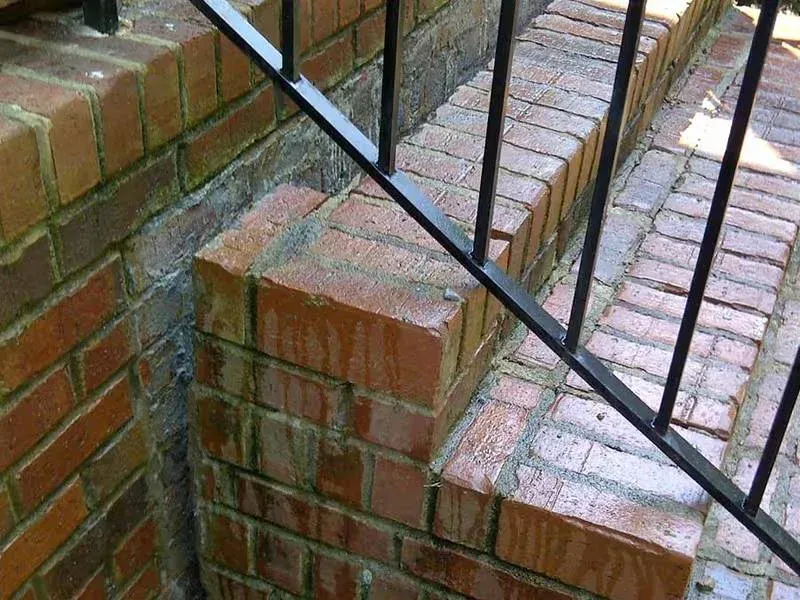
Outside, stair-step cracks run through the brick near the downhill corner, and the brick steps at the back door have parted from the stoop. Roswell put most of its houses up between 1970 and 1999, on lots cut into hills with loose dirt shoved back against daylight basement walls. That backfill keeps settling for decades, and a corner that drops even a little takes the door frames out of square, which is why a latch is often the first thing you notice.
Our family laid brick by hand before we ever lifted a house, and we still repair houses like masons.
The crew that sets your piers also repoints the joints, so an old historic-district chimney gets brick and mortar that suit the house.

However deep a pier has to go on stony bluff ground, we never charge extra for depth.

Cracked brick on a two-story Colonial is sometimes a veneer problem over a sound footing, and we will say so rather than sell you piers.

Our contract runs two pages, the quoted price is final, and the lifetime warranty on piers transfers to your buyer.
Roswell's subsoils are dense red Cecil, Madison and Bethlehem clays, rated low for shrink-swell by USDA soil data. Much of the soil map across town reads "urban land," ground cut, filled and built over, and water can soften it until the corner carrying the most weight sinks.
Madison soils carry mica, which can turn slick when wet. Toward the Chattahoochee the maps show stony slopes of 20 to 60 percent, and creek and river bottoms map as occasionally flooded.
Builders often poured the basement and shoved loose dirt back against the walls without compacting it. Stoops and chimneys set on that backfill keep sinking for years.
On a sloped lot the low corner tends to drop first, leaving stair-step cracks through the brick or block. Inside, floors tilt and doors begin to rub.
Our foundation repair page walks through a steel pier installation.
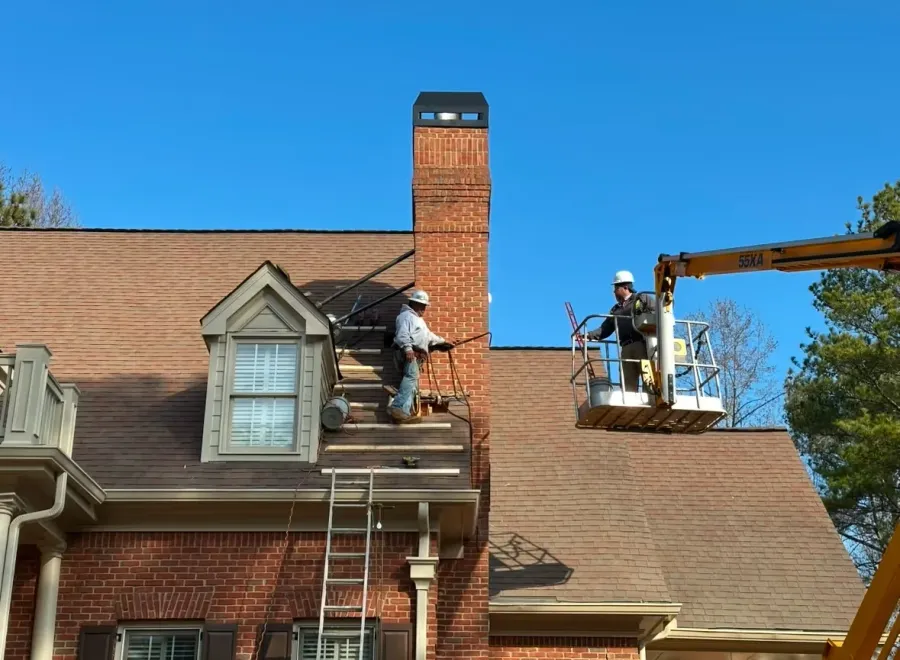
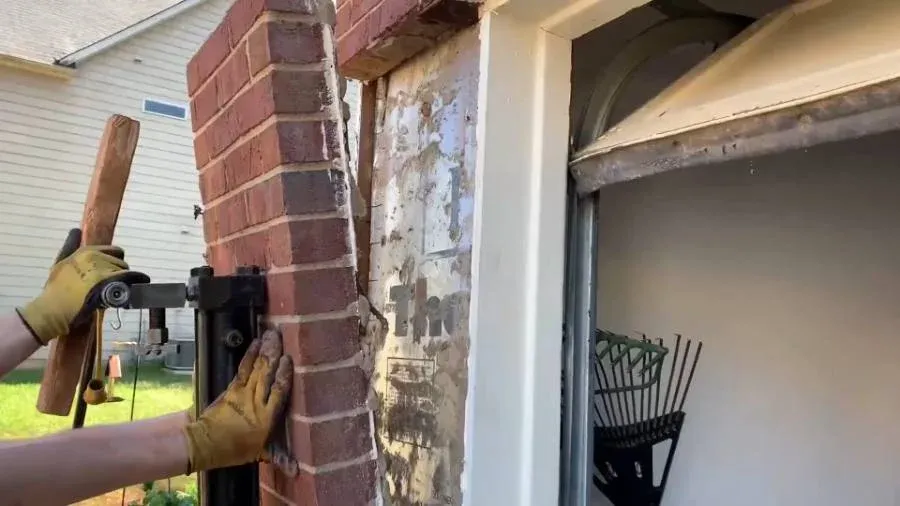
When a 1970s or 1980s house has a brick chimney up an outside wall, its footing may sit in loose basement backfill. People call it "pulling away from the house," with a crack from the ground to the soffit.
The footing sank in softening backfill. Steel piers go under it to load-bearing strata, hydraulic jacks raise the chimney while push poles bring it upright, and brick anchors replace the broken wall ties. The same crew repoints the loosened joints, usually in one day.
The brick was often laid on roof framing, which calls for a different repair. We check where the crack begins before quoting anything.
In the historic district, a repair that changes a chimney's outside appearance needs a Certificate of Appropriateness first. We handle structure and brick only, so caps, liners and sweeping stay with a sweep. More on leaning chimney repair.
Hills and aging basements bring a few more repeat problems.

An uphill block wall bowing into a daylight basement gets braced with steel I-beams.

Cracked brick over a two-car garage door on a 1980s house usually traces to a sagging lintel.

Stacked walls above the river bluffs get anchored and locked in where they stand.

Tall decks off a hillside basement sink at the post footings, and piers stabilize them.
Roswell's oldest buildings are the Roswell Mill, the Old Bricks and the Mill Village houses near the river, many from the late 1830s and 1840s. About two in three homes came later, between 1970 and 1999.
Martin's Landing, started in 1977 on the Chattahoochee's north shore, mixes Colonials, split-levels and ranches on hilly roads. Horseshoe Bend sits beside the river, brick and stucco ranches on wooded lots around a 1974 country club. Mill Village houses are small, old and often built as duplexes.
Vickery Creek, also called Big Creek, runs 26.5 miles to the Chattahoochee at Roswell's southern edge, where Highway 9 crosses the river. Part of Roswell's National Register historic district boundary follows it.
Its bottoms map as Toccoa, Cartecay and Congaree soils, all occasionally flooded, so a footing there gets less support than one on the ridge.
This is a general description of a job our crews do often on basement houses from Roswell's era. A lead man who has done the work measures the cracks and corners, then installers and owners price it together on a two-page contract.
On job day the crew digs at the corner, drives push piers to load-bearing strata, raises the corner, pins loose veneer and repoints the stair-step cracks.
Hear from homeowners about the repair, the crew, and the finished work.
“I moved into a house that was built in the 1970's. My initial call was for the front porch which was sinking when I moved in. ... found that one side of the house was also sinking. ... I would highly recommend Anglin's Foundation to anyone I know.”
Honest answers before you make a decision.
Still have QuestionsDescribe the bowing wall or leaning chimney, and we will measure it and explain the cause. The two-page contract price is what you pay.
Get your free structural estimate
Schedule your free estimate with a quick phone call.
770-422-2924