

Depth on the house, not the invoice
Pier depth can vary from one corner of a house to the next, and a deeper pier never raises the price.
Stony bluffs, wet creek bottoms and aging ranch footings let Sandy Springs houses settle, and Anglin's brings them back on steel push piers.
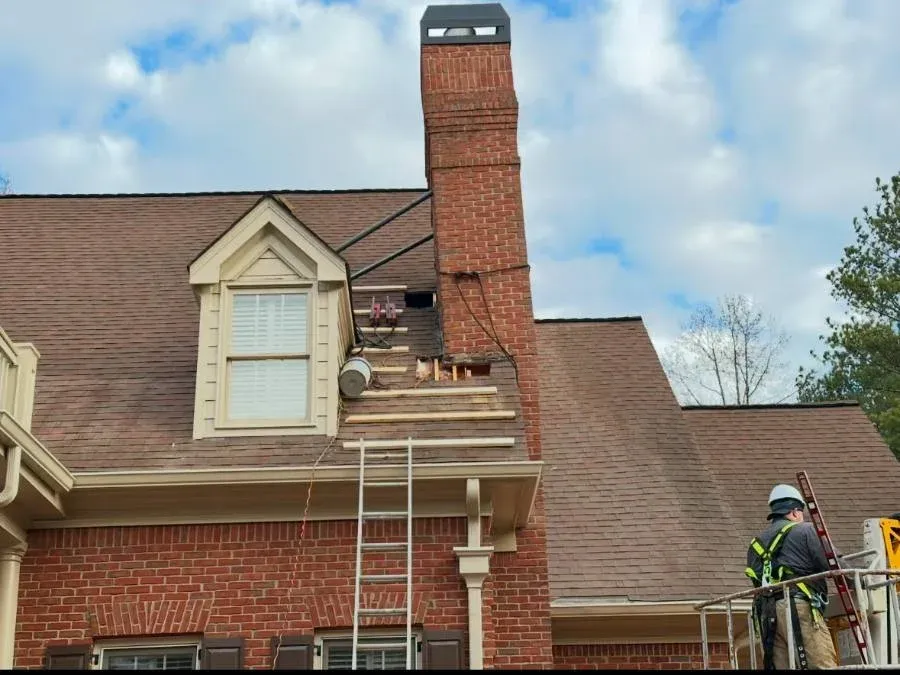
Foundation repair in Sandy Springs means working two kinds of ground. Along the Chattahoochee and creeks like Marsh Creek, some houses sit on steep, stony bluff soil and others on creek bottoms that stay wet. North of I-285, the 1950s and '60s homes of Glenridge Hammond and Mount Vernon Woods are old enough for footings, stoops and chimneys to drift.
We drive steel push piers under whatever moved, bring it back, and our own masons finish the brick on the same visit. Call the Marietta office at 770-422-2924 to book a free estimate. The person who comes out has set piers and isn't a salesman.
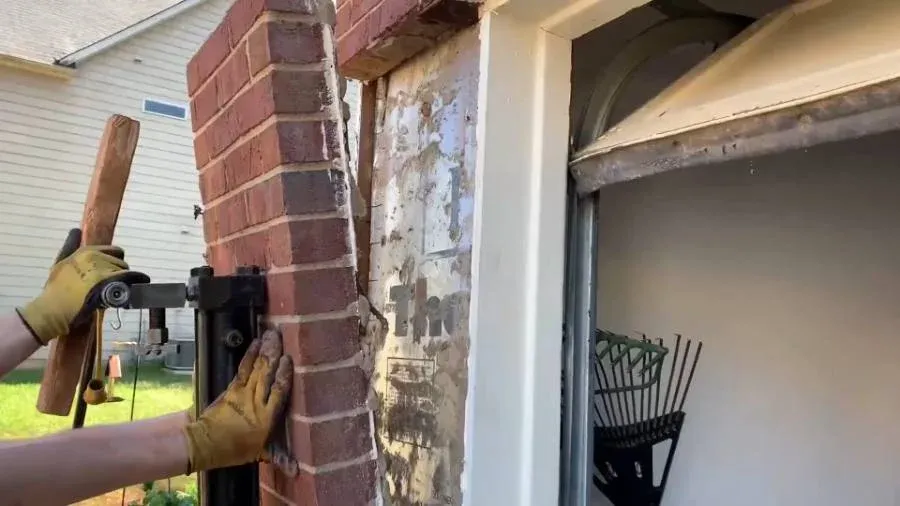
The space between the chimney brick and the end wall has opened enough that you notice it now without looking for it. Down at the ground it is still tight. Up near the top you could get a finger in.
A ranch chimney is solid brick standing on its own small footing at the end wall. The ranches north of I-285 were poured more than 60 years ago, and rain softens the ground under that footing until the weight leans out. It happens slowly, so people live with it for years. The gap you could measure this fall will be wider next fall, and the brick has to come back before the joints can be repaired.
We've kept these habits since Olin L. Anglin founded the business in 1930, and they matter on hillside and ranch jobs here.
Pier depth can vary from one corner of a house to the next, and a deeper pier never raises the price.

Custom brackets come out of our own shop, welded by certified welders, for tall basement walls and heavy brick corners. The same crew that drives your piers matches the old brick and mortar, so no second contractor is needed.

Some cracks on these ranches are in the brick veneer, not the footing, and we say so when piers aren't needed.

It runs two pages, with the full price written down before anyone picks up a shovel.
The USDA soil survey maps bouldery Rion-Louisburg and stony Grover-Mountain Park soils on the city's bluffs, on slopes as steep as 60%, and sandy bottomland soils along the river and its creeks that flood at times. The upland Cecil clay rates low for shrink-swell, so water and slope do most of the damage.
The city's 2019 water report described Marsh Creek and Crooked Creek as eroding and cutting deeper. A footing on a cut-and-filled lot, or beside a creek that keeps carving, loses support first at its heaviest corner.
The ranches north of I-285 rest on footings poured more than 60 years ago. When the soil under one corner softens, the house shows it in sticking doors, drywall cracks and the brick.
See how our foundation repair process runs, from the first hole at the footing to the final lift.
A gap between chimney and wall that runs from the ground toward the eave usually means the ground moved, not that the chimney was built wrong. A ranch stack stands on its own footing at the end wall, and rain softens the ground beneath it.
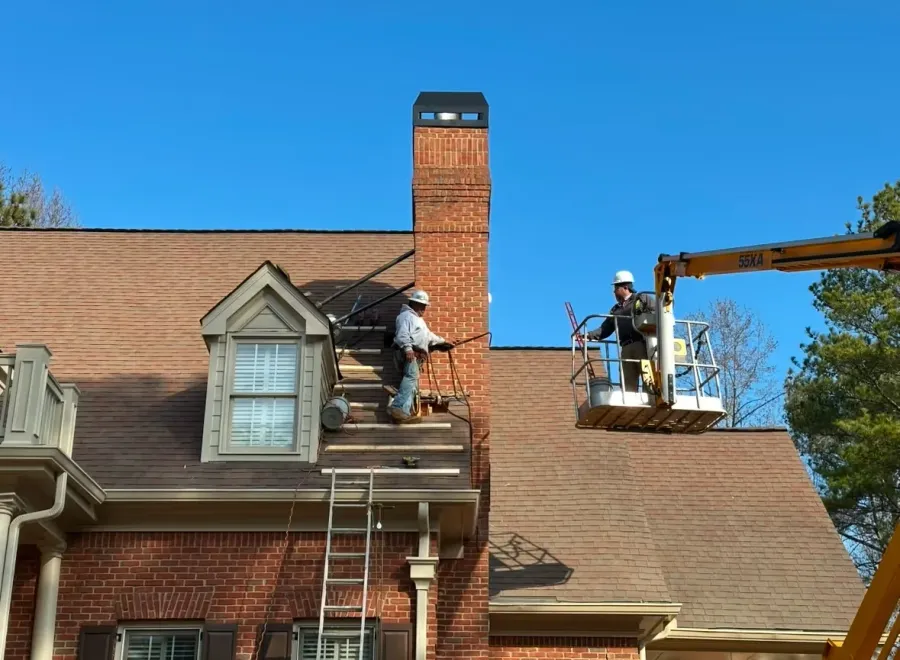
Piers alone would leave the stack out of plumb, so we pier the footing while steel push poles staked in the lawn lean on the chimney. New brick anchors take over for the broken wall ties, and our masons fix the mortar the lift opened.
We don't do liners, caps or chimney leaks, and a roofer should reseal the flashing afterward. Read more about leaning chimney repair.
Beyond footings and chimneys, these repairs fit the lots and houses found across Sandy Springs.

Sloped yards near the Chattahoochee lean hard on old walls, and we anchor existing retaining walls and lock them in where they stand.

A house built into the slope can have block walls bowing inward, and basement wall repair braces them with steel.

Front brick steps on Glenridge Hammond's late-1950s and early-'60s ranches can crack and drop from the door, and piers bring them back up.

Townhomes make up about one in nine Sandy Springs homes, and a loose veneer wall gets anchored back into place.
Sandy Springs follows the river south from Morgan Falls Dam and Bull Sluice Lake, with Fulton County on this bank and Cobb across the water. High Point's southern edge follows Nancy Creek, and GA 400 splits that neighborhood in two.
Glenridge Hammond holds about 500 homes, mostly brick ranches built from 1957 to 1965, just north of I-285 below Johnson Ferry Road. Londonberry dates to 1957 and Cherokee Park to the 1950s, both inside the Perimeter. Huntcliff and Chattahoochee North border the river itself.
On lots that fall toward the water, houses this age have had decades of soil pressing on their basement and yard walls.
Trees 18 inches or wider need a removal permit, and the river corridor and 75-foot stream buffers can restrict construction and land disturbance near water.
On a brick ranch of this era, a typical Anglin's chimney job starts by digging down to expose the chimney footing. Two steel piers go under it to load-bearing ground, then the chimney is pressed back toward the house as it lifts.
Brick anchors hold it against the wall. Once the chimney stops moving, the same crew repairs the mortar joints the movement cracked.
Hear from homeowners about the repair, the crew, and the finished work.
“They will give you a honest opinion on all repairs (instead of saying whatever will sell the most amount of work).”
Honest answers before you make a decision.
Still have QuestionsSomeone picks up 770-422-2924 Monday to Saturday from 8 AM until 6 PM, and an answering service covers the nights. Once you're on the schedule, most repairs wrap up in a single day, and Regions Bank offers financing on approved credit.
Book a free slope and footing check
Schedule your free estimate with a quick phone call.
770-422-2924