
Why Are My Floors Sagging?
Sagging or bouncing floors usually trace back to failing supports in your crawl space, not the floor itself. Here's how we fix it for good.
Posted August 4, 2026
Topics: Floor Leveling / Crawl Space Repair
If your floors dip in the middle of a room, bounce when you walk across them, or feel like they slope toward one wall, the problem usually is not the floor itself. It is what is holding the floor up. And in most Atlanta-area homes, that means the trouble is down in the crawl space.
The problem starts under the house
A home built over a crawl space rests on a system of supports down below: wood posts standing on footings, with beams running across them and the floor joists sitting on top. You never see any of it, so it is easy to forget it is there, right up until the floor above it starts to give.
Over the years those supports weaken. The original wood posts sit in a damp crawl space and slowly rot, or they sink and shift off the small footings they were set on. Once a single post stops carrying its share of the weight, the beam above it sags, and the joists and the floor sag right along with it. That is the dip you feel underfoot.
Warning signs
- Floors that bounce or feel spongy in certain spots
- A floor that visibly slopes or sags toward the center of a room
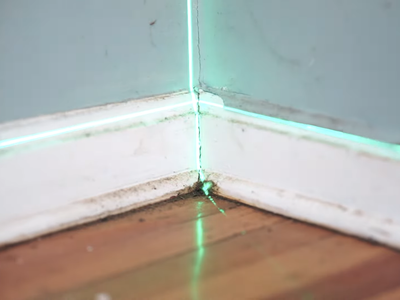
- Gaps opening up between the floor and the baseboards
- Doors or windows over the low spot that suddenly stick
- Furniture that looks slightly out of level against a wall
Why it happens here
Georgia's red clay does not help. It holds water, swells and shrinks with the seasons, and keeps the ground under those footings moving. Add a crawl space that stays humid, poor drainage that sends water underneath the house, or footings that were undersized to begin with, and the supports settle unevenly. Older homes are the ones we see most, simply because their supports have had the most time to give.
Why you cannot just prop it up
A sagging floor over a crawl space is not an afternoon DIY job. Jacking a post up too fast, or shimming it without fixing the footing under it, can crack the floor or the walls above, and it does nothing about the reason the post sank in the first place. To fix it for good, you have to rebuild the support the right way, from the footing up.
How we fix it
We rebuild the support underneath, and what goes in depends on what we find down there. On a typical job that means some combination of:
- Structural steel beams set beneath the joists to carry the floor across the affected span
- Vertical steel supports placed where the load needs a solid path to the ground
- Supplemental concrete footings, poured or precast, giving each support a real load-bearing base instead of whatever it had been standing on
- Controlled hydraulic lifting, taken slowly so the finishes above do not crack
- Reinforcing or splicing a damaged joist, where a cracked joist is part of the problem
We measure the whole floor first to find the true low points, because occasionally the trouble is not in the crawl space at all. If a perimeter footing has settled, no amount of work underneath the floor will hold it, and the answer is foundation repair instead.
The result is a floor that is solid underfoot again, with no more bounce and no more slope, standing on supports that will not fail the way the originals did. How close to dead level it comes back depends on the house and how far it has moved, which we can tell you once we have measured.
If getting the floor level is what you are after, that is our floor leveling work. If you already know the trouble is under the house, see structural crawl space repair.