Services
Brick Gable Repair in Metro Atlanta
The brick above the roof line is the most exposed veneer on the house. It is tall, it is heavy, there is less structure behind it to tie into, and it takes the most weather, so a gable is one of the first places brick starts to tip outward, often while every wall below it is still tight. We secure it back to the framing with an anchor pattern set for the weight standing above the roof.
The hardest place on the house for brick to stay put
A gable is the triangle of wall that fills in under the roof at the end of the house. Where that triangle is brick, it is the most exposed veneer you own, and it is working against more than the walls below it are.
It is tall. It is heavy. There is less structure behind it to tie into than there is behind a full-height wall. And standing above the roof line, it takes more wind and more weather than any other brick on the house. Those four things together are why a gable is one of the first places brick begins to separate and tip outward, and why it can happen while every wall underneath is still tight.
Warning signs
- Brick at the gable end leaning or tipping outward near the roof
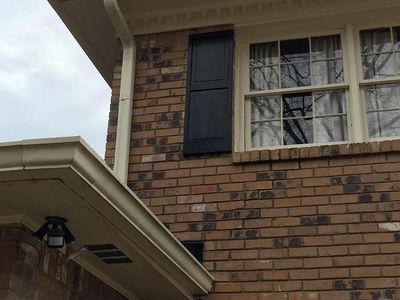
- A gap opening between the gable brick and the soffit, trim, or roof line
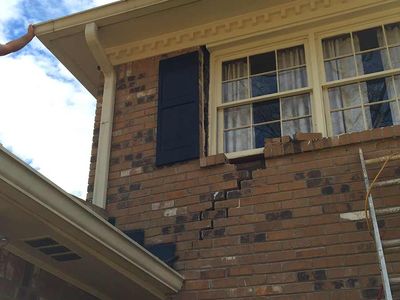
- Stair-step cracks running up through the mortar joints toward the peak
- The gable looking out of plane with the wall below it when you sight along the house from the ground
- A gap that is visibly wider at the top of the gable than at the bottom
Sighting up the wall from the driveway on a clear day is the easiest check a homeowner can do. A gable that has started to move usually shows it at the top first.
Why gables move first
Brick veneer is a single outer layer hung on the house for weather and looks. It is not holding the house up. Behind it is the real structure, and the two are tied together with metal wall ties buried in the mortar joints. When those ties rust through, or there were too few of them to begin with, the brick is left standing on its own.
That is true of any brick wall. What makes the gable different is what it asks of those ties. It is carrying more weight, higher up, with less behind it to hold on to, and it is being pushed on by weather the walls below are partly sheltered from. So the gable is where a tie problem shows up first, and it can show up there alone.
A gable can also move because the ground moved. If the footing under that end of the house has settled, the brick riding on it cracks and separates rather than bending. That is a different problem with a different repair, and telling the two apart is the part that matters.
How we fix it
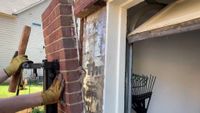
We secure the gable back to the framing behind it with masonry anchors, installed through the brick and recessed into the mortar joints so they are covered over and not visible. They take over the job the original wall ties stopped doing. The anchor pattern is set for the height and the weight of the brick standing above the roof line rather than to a standard spacing, because that weight is the whole reason the gable moved first.
With the gable stabilized, a leaning section can often be brought back a good distance toward where it belongs, using hydraulic pressure worked slowly against the wall. How much comes back depends on the wall and how far it has gone, so we tell you what to expect after we have looked at it rather than before.
If the gable moved because the footing under that end of the house settled, the ground is the real problem and we stabilize the foundation first with foundation repair. Anchoring brick over a footing that is still moving treats the symptom.
Our own masons then grind out and repoint the cracked joints and patch damaged brick, matching the existing mortar as closely as it can be matched. New mortar needs time to weather before it blends in.
What this is not
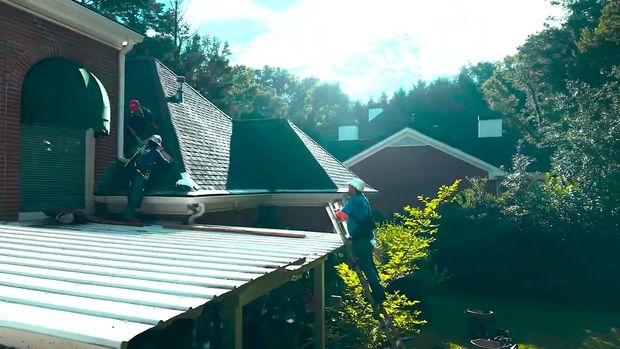
We repair brick that has moved structurally. We do not take on plain cosmetic tuckpointing as a job of its own, we do not replace brick as a service, and we do not build new masonry or tear a gable down and rebuild it. Saving the original brick is the entire point. We are also not roofers: the shingles, the flashing, and the roof itself are someone else's work, and we stay on the masonry side of that line.
If the brick that has moved is below the roof line rather than in the gable, that is brick wall repair, which is the same family of problem read on a different part of the house. Either way the useful next step is having someone look at the wall and the ground under it together. That is what the free inspection is for.