Services
Brick Wall Repair in Metro Atlanta
Brick pulling away from the house or a wall bulging out usually means the veneer has lost its grip on the structure behind it, or the ground under it has moved. We find out which, secure the brick back to the structure with masonry anchors, and restore the brickwork.
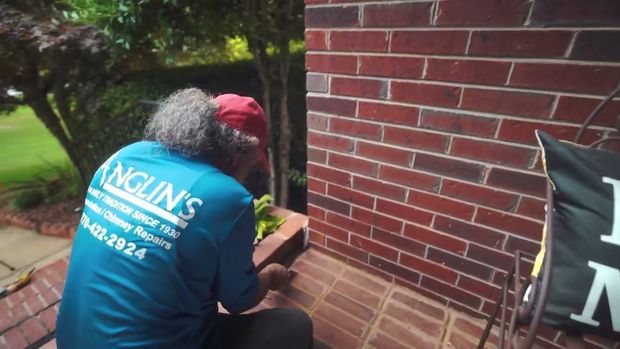
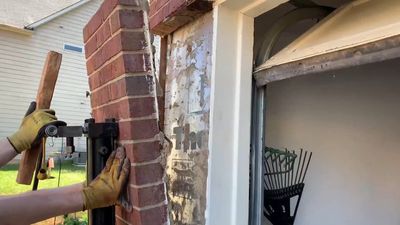
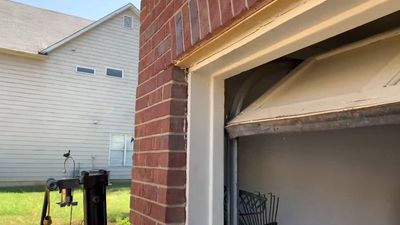
Brick veneer and facade repair
Most homes around Atlanta are built with a brick veneer. The brick is a single outer layer hung on the house for weather protection and looks. It is not holding the house up. Behind it is the real structure, and the two are tied together with metal wall ties buried in the mortar joints.
That is worth knowing, because it explains almost everything that goes wrong with brick. When you see a gap opening up or a wall bulging out, what you are usually looking at is a connection problem, a ground problem, or both.
Warning signs
- A gap opening between the brick and a window, door, soffit, or trim
- Stair-step cracks following the mortar joints through the brick
- A section of wall that bulges or leans out compared to the brick around it
- Cracks that open a little wider each season
If the brick that has moved is the gable, the triangle of wall up under the roof, that is its own repair with its own reasons. See brick gable repair.
Why brick pulls away
There is more than one answer, and the right repair depends on which one you actually have.
- The wall ties have failed. The metal ties holding the veneer to the structure rust through, or were too few and too far apart to begin with. Once they let go, the brick is standing on its own and starts to lean out. Water getting into the wall makes it happen faster.
- The foundation under it has settled. Brick does not bend. When the footing beneath a section of wall drops, the brick riding on it cracks and separates instead. Here the brick is the symptom and the ground is the problem.
Telling these apart is the whole job. Repointing a crack caused by a settling footing just puts fresh mortar in the same place to crack again, and driving piers under a wall whose ties have rusted out fixes something that was never broken.
How we fix it
Once we know what actually moved, the repair follows from it.
- Masonry anchors and pins. Where the veneer has lost its connection, we install anchors through the brick into the structure behind it, recessed into the mortar joints and covered over so you do not see them. This is the repair that takes over the job the original wall ties stopped doing.
- Controlled realignment. Stabilizing the wall comes first. From there we can often bring a bulging or leaning section back a good distance toward where it belongs, using hydraulic pressure worked slowly against the wall. How much comes back depends on the wall, the soil, and how far it has gone, so we tell you what to expect after we have looked at it rather than before.
- Foundation piers, when the ground is the real cause. If the wall moved because the footing under it settled, we stabilize the foundation first with foundation repair. Fixing the brick without fixing that would be treating the symptom.
- Masonry restoration. Our own masons grind out and repoint the cracked joints and patch damaged brick, matching the existing mortar as closely as it can be matched. New mortar needs time to weather before it blends in.
What this is not
We repair brick that has moved structurally. We are not a general masonry contractor: we do not take on plain cosmetic tuckpointing as a job of its own, we do not replace brick as a service, and we do not build new masonry or tear a wall down and rebuild it. Saving the original brick is the entire point.
If your brick is pulling away, the useful next step is having someone look at the wall and the ground under it together. That is what the free inspection is for.