
Services
Porch Column Repair in Metro Atlanta
A porch column carries the roof above it down to a footing in the ground. When that footing settles, the column goes with it, and the porch roof follows: gaps open at the top or the base, the column leans out of plumb, and the masonry around it cracks. We work on wood, brick, stone and steel columns, stabilising what is under them rather than rebuilding the porch.
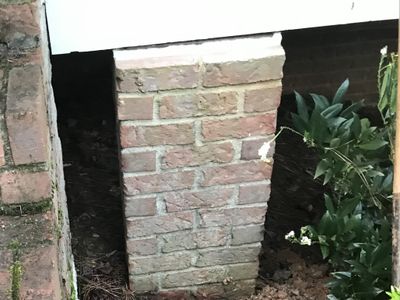
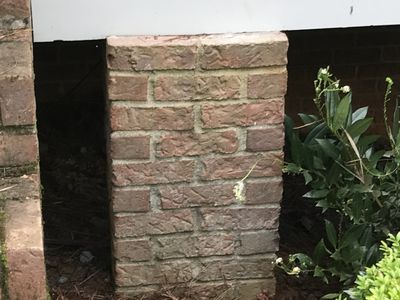
A column is only as steady as what is under it
A porch column has one job: carry the weight of the roof above it down to solid ground. Everything you can see, the wood post, the brick pier, the stone base, the steel support, is the visible part of a load path that ends at a footing you cannot see.
That footing is where the trouble usually starts. When it settles, the column travels down with it, and the porch roof follows. What you notice is a gap that was not there before, a column that no longer looks plumb, or masonry splitting at the base.
Warning signs
- A gap opening between the top of a column and the porch roof or beam
- A column that leans, or looks out of plumb when you sight along the porch
- Cracked or crumbling masonry where a brick or stone column meets its base
- The porch roof or ceiling sagging between columns
- A column base sitting lower than the ones either side of it
- Wood that has rotted at ground contact, or steel that has rusted through at the base
Sighting along the row of columns from the end of the porch is the quickest check. Columns that have moved usually show it as a line that is no longer straight.
Why porch columns move
The reasons are the ones behind most structural movement around here, arriving at a smaller and more exposed footing than the house has.
- The footing under the column settled. Georgia's red clay swells when it is wet and shrinks when it is dry, and porch footings are often shallower and poured on less-compacted fill than the ones under the house. That is enough to let one column drop while the house beside it stays put.
- Water is being delivered to the base. A downspout, a missing gutter, or ground that slopes toward the porch keeps the soil under a footing soft and washes it out over time.
- The base of the column itself has failed. Wood in ground contact rots and steel rusts, and a brick or stone column loses its footing joint. Here the column is the problem rather than the ground.
Which of those you have decides the repair, and they are not always distinguishable from the driveway. That is what the inspection is for.
How we fix it
Where the ground is the cause, we stabilise the footing the same way we stabilise the rest of a house: steel piers driven down through the unstable soil to ground that does not move, then the load transferred onto them. With the footing holding, the column can usually be brought back toward its original height rather than left where it settled. How much comes back depends on how far it went and on what is above it, so we tell you what to expect after we have looked at it rather than before.
Where the base of the column has failed rather than the ground, the repair is at the column itself. We work on wood, brick, stone and steel, and what happens next depends on which one you have and how much of it is still sound.
Either way our own masons repair the brick, stone and mortar afterwards and match the existing work as closely as it can be matched. New mortar needs time to weather before it blends in.
What this is not
We repair porch columns that have moved or failed structurally. We are not carpenters and we are not porch builders: we do not build new porches, we do not take on railings, decking or trim, and we do not do cosmetic column work as a job of its own. The point is to save the porch you have by fixing what is under it.
If the porch itself is level and it is the steps or the stoop in front of it that have dropped, that is steps and stoop repair. If it is a deck rather than a porch, the same problem at its posts is deck post repair. Either way the useful next step is having someone look at the column and the ground under it together, which is what the free inspection is for.