
Services
Foundation Repair in Metro Atlanta
Cracks in the walls, sticking doors, and sloping floors mean the ground under your home has shifted. We drive structural steel piers down to load-bearing strata to stabilize the foundation, and lift it back toward level where conditions allow.
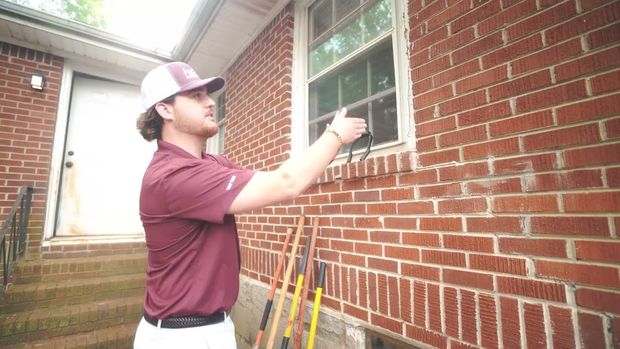
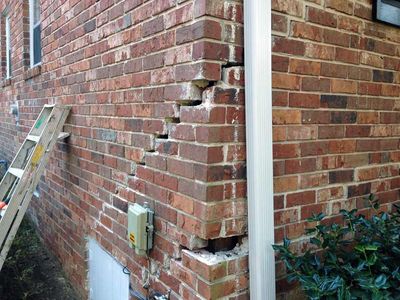
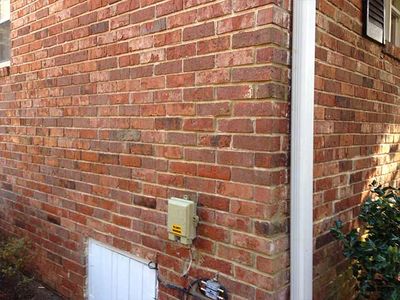
The warning signs of a failing foundation
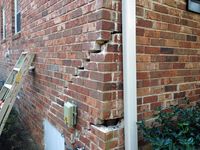
A foundation that's on the move rarely stays quiet. The signs usually show up somewhere other than the foundation itself:
- Cracks in brick, mortar, drywall, or the floor
- Doors and windows that stick, or won't latch the way they used to
- Gaps opening up around window and door frames
- Floors that slope, bounce, or feel uneven
- Separation between the house and an attached porch, steps, or garage
Any one of these on its own may be nothing. Several of them together usually means the ground under your home has stopped supporting it.
Why foundations settle in Georgia
Georgia's red clay is expansive: it swells when it's wet and shrinks when it dries, and that constant movement works against a foundation year after year. Add a negative slope that drains water toward the house, an old plumbing leak, or a home built before modern footing codes, and the soil eventually gives way under part of the foundation. That's when it starts to settle.
How we fix it: steel push piers
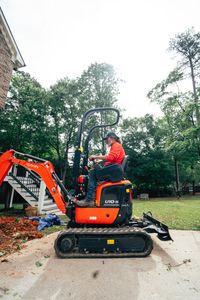
Once we've confirmed the foundation is the real source of the problem, we stabilize it with steel push piers driven down to load-bearing soil or bedrock. We use top-brand hydraulic equipment to drive each pier to refusal, transfer the weight of the home onto it, and lift the foundation back toward level.
We use push piers instead of pressure grouting or compression methods because those are temporary: they cost you more when they fail and you have to do the job twice. Push piers are a permanent fix:
- Permanent stabilization down to stable soil
- A one-time, lifetime solution instead of a patch
- Your landscaping stays largely intact
- Quick, clean installation
Reaching the footing sometimes means working through what is on top of it. Where access requires it, we cut, remove, or modify concrete around the footing and put it back as part of the repair.
Sinking structural slabs
Not every foundation sits on a footing you can get a pier under in the usual way. Where a structural slab has settled, we can stabilize and lift it using custom slab bracket piers: steel brackets fitted to the slab itself and carried by piers driven to load-bearing strata, then loaded hydraulically under control.
Worth being clear about what this is, because the words in this trade get used loosely. This is structural pier work carrying the slab on steel. It is not mudjacking, and it is not foam or grout injected underneath to float the concrete back up. Whether a given slab is a candidate depends on what it is carrying and what is under it, which is something we determine on site.
One contractor, start to finish
Fixing the foundation is only half the job. The cracks and damage it left behind are the other half. Mending masonry is a separate skill from foundation work, and most foundation companies don't do it. We do both, on the same job, so when we're finished it looks like your home never had a problem in the first place. Qualifying repairs carry a transferable limited warranty, with the coverage and terms for your job set out in your written proposal.
You Might Also Like See all
-
Foundation Repair
Push Piers vs Helical Piers: What Actually Goes Under Your House
Two ways to underpin a settling foundation, and they are not interchangeable. An honest comparison from a company that drives one of them.
-
Foundation Repair
What Happens When a House Is Built on Fill Dirt
Some Metro Atlanta homes are not sitting on natural ground. Here is why filled lots settle, how to spot it, and what a real repair has to reach.
-
Foundation Repair
What Foundation Repair Costs in Georgia
Most quotes are a vague range. Here is what foundation repair really costs in Metro Atlanta, what moves the price, and the minimum we publish.