
Services
Leaning Chimney Repair in Metro Atlanta
A chimney pulling away from the house is a structural problem, not a cosmetic one. Some have settled at the footing and need piers underneath; others have moved from the roof line up and need straightening and steel support. We diagnose which, then our masons restore the brick. No teardown.
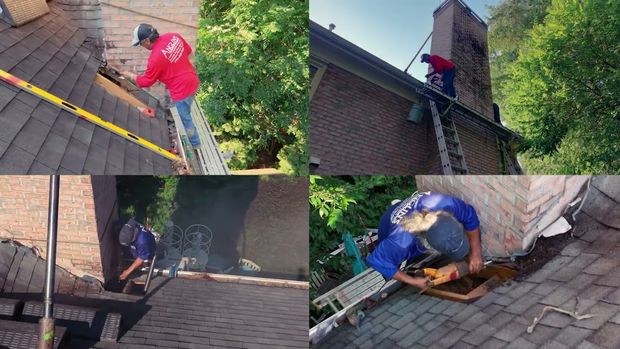
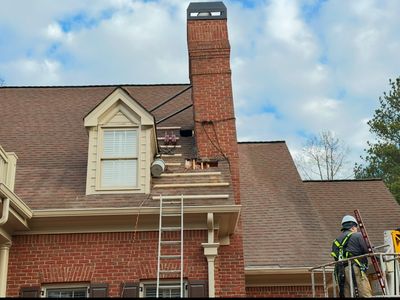
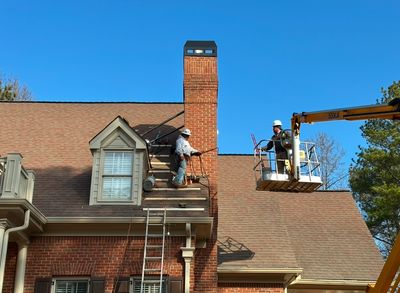
We save leaning chimneys, we don't tear them down
Most companies handle a leaning chimney one of two ways: they stabilize it and leave the brick looking wrecked, or they tear the whole thing down and rebuild it for a fortune. We do neither. We lift your existing chimney back into place, secure it permanently, and restore the masonry so it's solid and looks right again. It's the harder way to do the job, and it's the reason homeowners across Georgia call us for chimneys nobody else will save.
Which way is it leaning?
The direction a chimney leans tells us where the problem is:
- Leaning away from the house is usually a foundation issue: the footing under the chimney settled because the soil couldn't carry its weight, or the footing was undersized or poured on thin, unreinforced concrete to begin with.
- Tilting toward the house is usually structural: the chimney wasn't properly tied to the home's framing, or a prefabricated flue was fastened to the roof sheathing instead of the wood framing.
A masonry chimney can weigh tens of thousands of pounds, so even a small crack at the base can translate into the top leaning a foot or more away from the house.
Warning signs to watch for
- The whole chimney visibly leaning toward or away from the house
- A gap opening between the chimney and the siding or roofline
- Missing or crumbling mortar joints, or unusually wide spacing between bricks
- Roof damage where the flashing meets the chimney
- Cracks in the chimney footing
- Loose or falling bricks, or spalling (the face of a brick flaking off)
How we straighten and restore it
There is no single leaning-chimney repair, and which one your chimney needs is the first thing we work out.
When the footing has settled, the fix belongs underneath. We stabilize the chimney's foundation with structural steel piers driven to load-bearing strata and lift it back toward plumb under controlled hydraulic pressure. Straightening the brick without addressing a footing that is still moving would just buy time.
When the base is stable and the movement is higher up, the repair is a different one. Chimneys that have shifted from the roof line up get shored and supported, pressed back toward position with hydraulic jacks, and then held there by transferring the chimney's load into sound structural framing, usually at a load-bearing wall in the attic, using steel tubes, beams, and angle iron as the situation calls for. In that case we are not piering the footing, because the footing is not what moved.
Either way, our masons then repair the mortar and brick the movement opened up, matching the existing masonry as closely as it can be matched. One contractor, structure and masonry both.
A note we would rather give you up front: when we open the roof to straighten a chimney, the flashing and cap around it need a roofing specialist afterward for a proper seal. That is not work we take on, and we will say so before we start.
Recent Leaning Chimney Repair Work See all
You Might Also Like See all
-
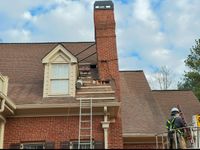
Leaning Chimney Repair
Why Do Chimneys Lean Away From the House?
A leaning chimney means the footing under it has moved. Here's what the lean direction tells you, and how we straighten it without a teardown.
-
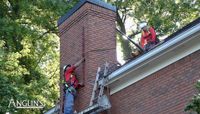
Leaning Chimney Repair
The Three Levels of a Chimney Inspection, Explained
Chimney inspections come in three levels set by a national safety standard. Here's what each one covers and which you actually need.